The Balcony Revolution: Why Strawberry Seedlings Are the Ultimate Urban Flex
The Tragedy of the Supermarket Strawberry
Let us begin by addressing a very sad, very universal truth about modern life in East Africa. If you walk into a high-end supermarket in Nairobi, Kampala, or Dar es Salaam right now, walk past the imported cheeses, and locate the small plastic clamshell of imported strawberries, you will experience profound disappointment. They look absolutely perfect. They are massive, flawlessly red, and completely symmetrical. They look like they were designed by an overly ambitious graphic designer. And then you take a bite, and your brain entirely short-circuits because you have just chewed into something that tastes exactly like lightly flavored, slightly damp cardboard.
This is the tragedy of the modern, commercially farmed strawberry. It has been genetically selected for exactly two things: shelf-life and the robust ability to survive being bounced around inside a refrigerated truck on the Naivasha highway for twelve terrifying hours. Flavor? Organic sweetness? That beautiful, sharp, sun-warmed tang that makes your eyes widen in pure joy? That was engineered out of the fruit about two decades ago in a sterile laboratory far away.
But what if there was another way? What if you decided right now, today, to declare absolute independence from the cardboard fruit cartel? This is not just a pipe dream. This is highly achievable, incredibly rewarding reality, and it all starts with a humble, deceptively powerful little plant: the Strawberry Seedling.
The Mighty Micro-Farm: Strawberries in the Urban Jungle
When the fantastic team at Ziva Landscaping Co. starts talking about the profound beauty of Africa and embracing the deeply restorative concept of the green earth, people usually picture rolling hills, massive agricultural operations, or sprawling, multi-acre estates blooming with indigenous trees. And yes, those are spectacular. But we believe with our entire hearts that the green earth paradigm doesn't mysteriously stop at the city limits. It climbs up the walls of apartment buildings. It thrives on seventh-floor tiled balconies in Kileleshwa, Kilimani, and Kololo.
The strawberry plant is the ultimate, undisputed champion of the urban micro-farm. You do not need an extensive quarter-acre plot in the leafy suburbs to grow these magnificent little berries. You do not need a tractor, and you definitely do not need heavy agricultural machinery. If you have access to a sunny windowsill, a hanging basket, a brightly lit balcony, or even a small, confused patch of dirt near your front gate, you possess all the required real estate to become an enormously successful, slightly smug organic strawberry farmer.
Choosing Your Weapon: Soil, Sun, and Containers
Strawberries are fundamentally woodland creatures that evolutionary history dragged out into the blazing sun, so they have some very specific, non-negotiable demands regarding their living conditions. First and foremost is the housing situation. If you are planting in containers on your apartment balcony, you cannot simply scoop up heavy, compacted dirt from the side of the road, throw it in a plastic bucket, and hope for the best. Potted strawberries demand absolute luxury.
You need a incredibly light, well-draining, highly organic potting mix. They detest having wet, soggy roots sitting in stagnant water. It makes them intensely miserable and wildly prone to catastrophic fungal diseases. Mix high-quality red soil with an unbelievable amount of rich, dark, beautiful organic compost (such as thoroughly rotted goat manure or high-end vermicompost), and throw in a generous helping of pumice or river sand just to ensure the drainage is flawless. You want water to run through your container eagerly, like a caffeinated river, while the organic matter holds onto just enough moisture to keep the very delicate roots completely hydrated.
Next is sunlight. Do not let their small, fragile-looking leaves deceive you; strawberries are absolute sun-worshippers. They require a punishing minimum of six to eight solid, uninterrupted hours of direct, blazing African sunlight every single day to dramatically convert that intense solar radiation into the complex, mouth-watering sugars that make your homegrown berries taste like concentrated drops of pure sunshine. If you try to grow them in deep, gloomy shade, you will arguably grow incredibly healthy, violently green leaves, but you will never see a single red berry.
The Art of Planting: The Magical Crown
When you purchase extremely healthy, vibrant strawberry seedlings from an expert nursery, you will immediately notice a very distinct anatomical feature right where the dark green leaves meet the searching, delicate roots. This fascinating structural anomaly is called the "crown." The crown is the absolute neurological center of the strawberry plant. It is from this vital hub that all new leaves, all long exploratory runners, and eventually all spectacular flowers and fruit dramatically emerge.
Planting depth is the single most common, utterly devastating mistake that eager, well-meaning urban farmers make. If you bury the delicate crown completely beneath your rich compost, suffocating it in the dark, damp earth, the plant will rapidly and spectacularly rot away, dying a grim, totally avoidable death before it ever has a chance to prove its worth. Conversely, if you plant the seedling far too high, leaving the sensitive upper roots naked and exposed to the harsh, drying afternoon wind, the plant will frantically dry out, wither, and collapse.
You must perform an act of immense horticultural precision: the soil line must perfectly, exactly align with the exact middle of the crown. The eager roots should be entirely, safely buried in the dark coolness of the soil, while the upper explosive growth center of the crown must bravely see the sun and breathe the open air. It is a very delicate balancing act, but once you rapidly master it, the plants will reward your careful attention with furious, unstoppable growth.
The Runners: An Aggressive Campaign for World Domination
Now we must discuss one of the most wildly entertaining and occasionally frustrating aspects of cultivating strawberry plants: their absolutely relentless, unstoppable desire to completely colonize all adjacent territory. Once a mother plant is happily established in its luxurious pot, well-fed with excellent organic compost and bathed in glorious sunshine, it will naturally decide that it is time to rapidly expand its empire.
It does this by dramatically shooting out incredibly long, enthusiastic green tentacles called "runners." These runners desperately snake across the soil surface, frantically hunting for any available, unoccupied patch of dirt. The exact moment a runner touches bare, receptive earth, it immediately, aggressively pins itself down and begins rapidly growing a completely brand-new, genetically identical "daughter" plant. Within a very few short weeks, that new daughter plant will establish its own deep roots and begin sending out its own frantic runners.
If you are trying to rapidly fill out a large, empty garden bed, this is an absolute miracle of aggressive nature doing all your expensive landscaping work completely for free. However, if you are strictly containing your plants in a small balcony pot, these enthusiastic runners will rapidly exhaust the mother plant, desperately sucking away all her vital energy that should rightfully be going into producing massive, juicy berries. If you want maximum fruit yield in a tight space, you must act ruthlessly. The instant you see a runner desperately reaching out over the side of the pot, snip it off with sharp scissors. Show no mercy. Force the mother plant to focus entirely on berry production.
The Payoff: Creating a Micro-Ecosystem
By bringing these incredible little plants onto your concrete balcony, you are doing something far more profound than simply saving a tiny bit of money on your weekly grocery bill. You are actively, beautifully participating in the profound greening of our urban spaces, taking a massive step toward a sustainable, totally organic lifestyle right in the concrete heart of the bustling city.
When your magnificent strawberry plants finally burst into bloom, producing perfectly delicate, bright white five-petaled flowers, you will inevitably notice an amazing shift in your immediate microclimate. You will begin to see busy, important bees and colorful, delicate butterflies frantically visiting your seventh-floor balcony, desperately seeking out the precious nectar. You have successfully created a tiny, functioning, vibrant ecosystem floating high above the congested, chaotic Nairobi traffic.
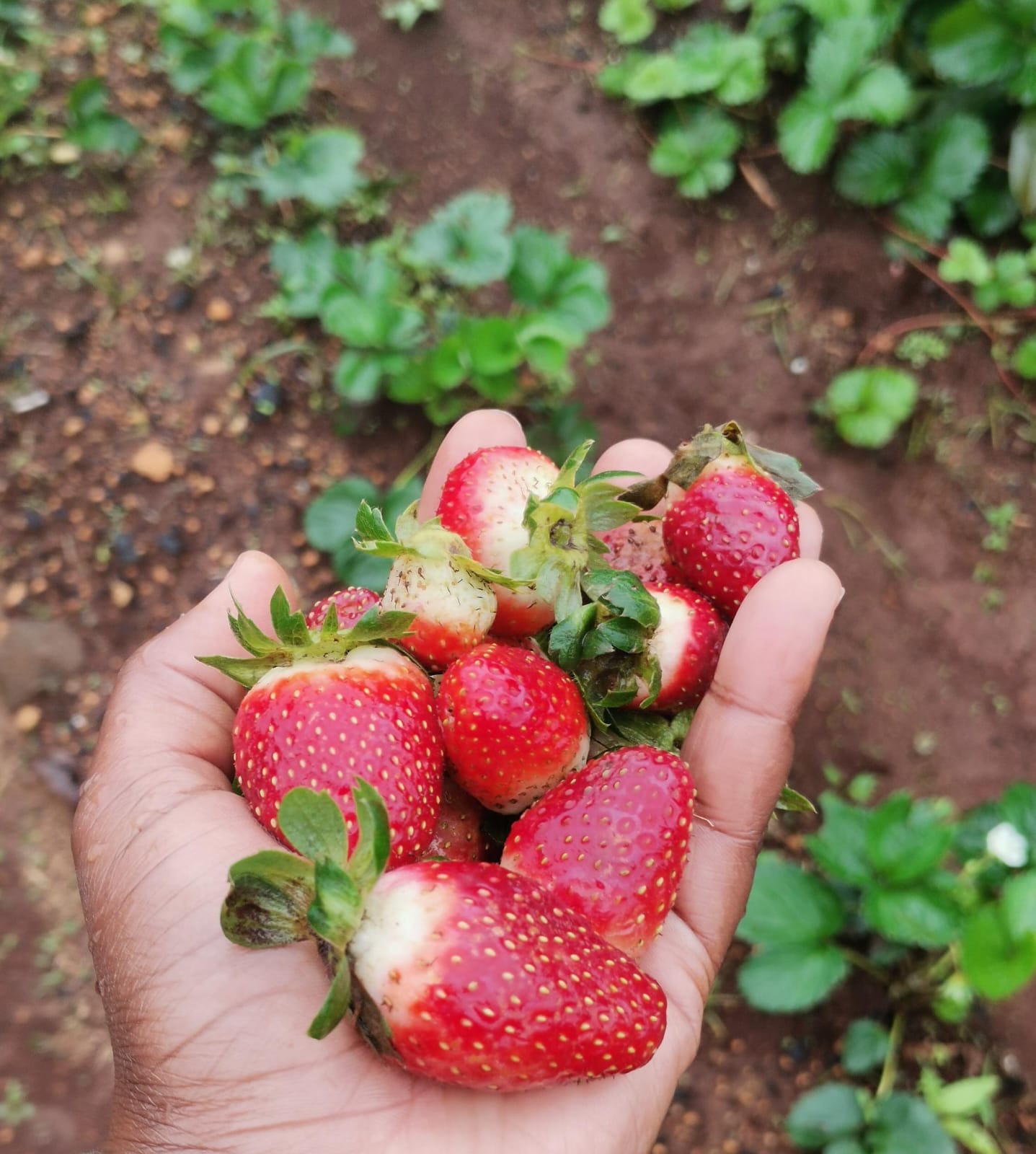
And then, finally, the spectacular harvest arrives. These are not gigantic, genetically modified cardboard monstrosities. These are completely organic, slightly misshapen, remarkably petite berries that will stain your eager fingers a stunning, deep red. But the taste? The taste is an explosive, blinding revelation. It is an incredibly complex, overwhelmingly sweet flavor bomb that profoundly reminds you of exactly what real, unadulterated food from a healthy, living soil is actually supposed to deeply taste like.
Conclusion: Start Small, Dream Big
At Ziva Landscaping Co., our ultimate grand vision for the magnificent beauty of Africa isn't strictly limited to sprawling, multi-acre suburban estates heavily populated with imported exotic ornamental shrubs. The true, enduring beauty of our remarkable continent lies fundamentally in our deep, unbreakable, vibrant connection to the living earth, no matter how small or seemingly insignificant that specific patch of earth happens to be.
A simple, modest pot of vigorously growing strawberry seedlings sitting quietly on an urban, concrete balcony is a bold, undeniable declaration of total independence. It is a definitive stand against the heavily commercialized, totally flavorless supermarket food industry, and a beautiful, quiet celebration of the immense, bountiful power of organic, sustainable growth. It proves that the magnificent green earth is powerfully resilient, incredibly adaptable, and always desperately eager to dramatically reward those who treat it with the careful, profound respect it deserves. Grab your seedlings, find a sunny patch of concrete, and radically transform your heavily urbanized space into a vibrant, delicious, incredibly edible landscape.
Conversations
0 thoughtsJoin the conversation
Share your experiences or ask a question
No thoughts yet
Be the very first to start the conversation.